
Biggest Cybersecurity Threats in 2026 for Businesses and Users

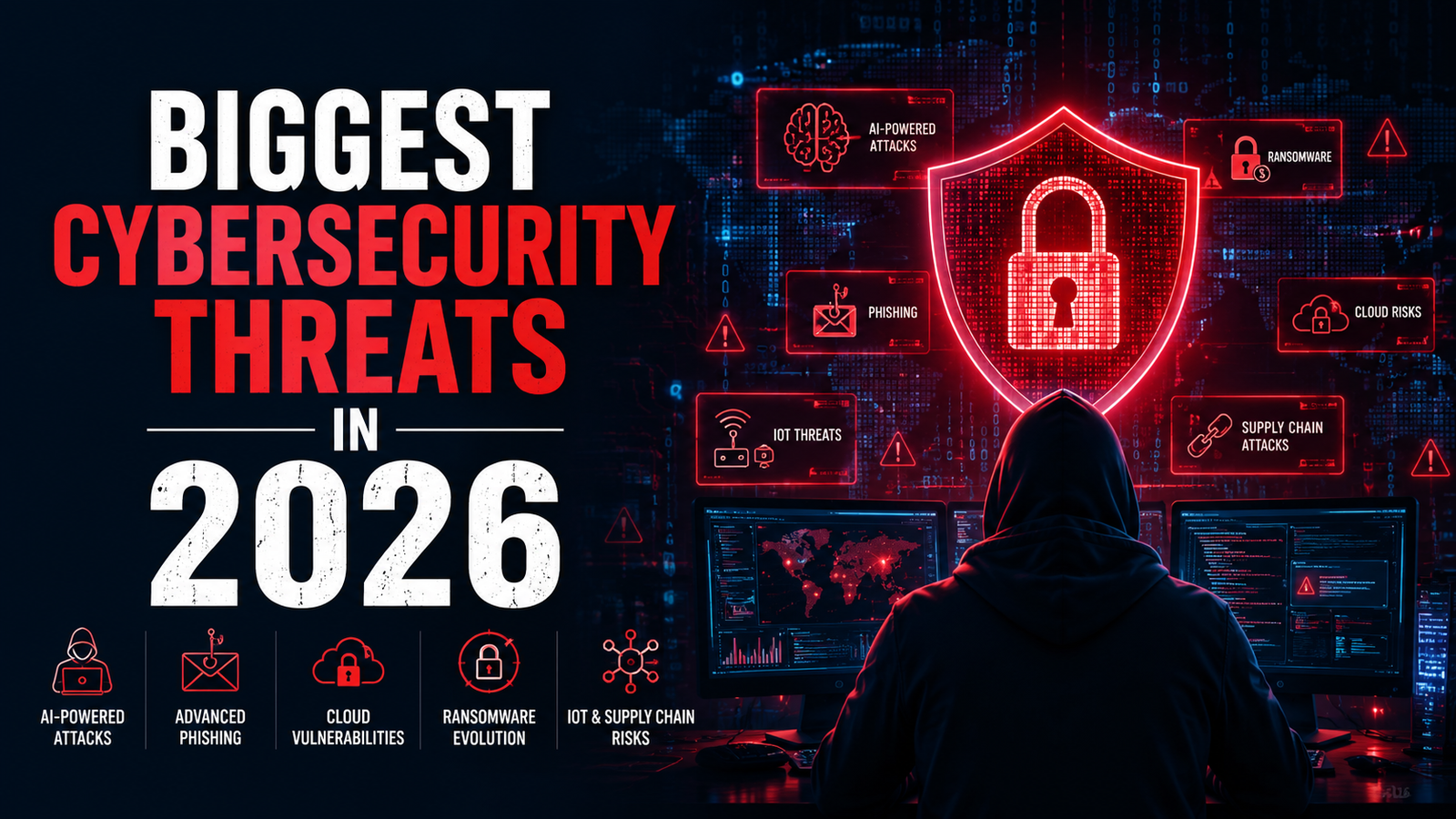
Hackers do not sleep. Every time we build a higher wall, they invent a taller ladder. As we lean deeper into artificial intelligence, edge computing, and hyper-connected networks, the risks multiply. What worked to stop cybercriminals two years ago will not keep your data safe today.
Understanding the Biggest Cybersecurity Threats in 2026 is the key to protecting your business and personal information. Cybercrime operates like a massive global enterprise. Attackers now use automated systems, machine learning, and decentralized networks to launch attacks at unprecedented scales.
In this guide, we break down the most urgent security risks facing us right now. You will learn how attackers leverage new technology, why legacy security systems fail, and what steps you must take to secure your digital footprint.
AI-Automated Phishing and Social Engineering
Email scams used to be easy to spot. Poor grammar, weird formatting, and strange sender addresses gave them away immediately. That era is over.
Hackers now use advanced language models to craft highly personalized, near-perfect phishing emails. They scrape social media and public databases to learn about their targets. Then, they generate messages that sound exactly like your boss, your bank, or your vendors.
When you look at comparisons like GPT-5.5 vs Claude Opus 4.7: Which AI Model Is Better, you see how powerful these systems are at generating human-like text. Unfortunately, criminals use these same capabilities to write convincing scripts for social engineering attacks. They automate the entire process, sending millions of targeted messages an hour. Employees cannot rely on spotting typos anymore; they need rigorous verification protocols.
Synthetic Identity Fraud and Deepfakes
Seeing is no longer believing. Audio and video deepfakes have moved from internet novelties to serious security risks. Attackers clone executives’ voices and use them to authorize massive wire transfers. They create synthetic video identities to bypass biometric security checks on banking applications.
The technology behind video generation and manipulation has advanced rapidly. If you read up on Google Gemini 3.1 Ultra Features Explained, you will notice the incredible leaps in multimodal capabilities. Bad actors harness similar open-source multimodal models to generate fake video calls in real-time.
To combat this, businesses must implement strict zero-trust policies. If someone requests a financial transaction over a video or voice call, employees must verify it through a secondary, independent communication channel.
Hardware Exploits and AI Infrastructure Attacks
We talk a lot about software, but hardware vulnerabilities are among the Biggest Cybersecurity Threats in 2026. As companies race to build internal AI systems, they buy massive amounts of specialized hardware.
Hackers know that data moves constantly between processors and memory. They actively target the AI Memory Bottleneck, looking for moments when sensitive data waits in temporary storage or transfers between components. If an attacker breaches the hardware level, they can steal proprietary training data or manipulate the AI’s output without triggering software alarms.
Furthermore, Internet of Things (IoT) devices remain a massive weak point. Smart office equipment, connected factory sensors, and remote monitoring tools often lack basic security patching. Attackers compromise these devices to establish a foothold inside corporate networks, moving laterally until they reach valuable databases.
Next-Generation Ransomware Extortion
Ransomware groups changed their business model. They rarely bother just encrypting your files anymore. Instead, they focus entirely on data exfiltration and multi-layered extortion.
If they breach your network, they steal your most sensitive customer data, internal emails, and financial records. Then, they demand a massive payment to keep the data private. If you refuse to pay, they do not just leak the data on the dark web.
They email your clients directly, telling them your company failed to protect their information. They report your data breach to regulatory bodies to trigger massive fines. This aggressive pressure makes ransomware one of the Biggest Cybersecurity Threats in 2026. Companies can no longer rely on backups alone; they must stop the data from leaving their network in the first place.
How to Protect Your Business and Data
You cannot eliminate risk, but you can make your organization too expensive and difficult to attack. Implement these crucial steps immediately:
- Enforce Phishing-Resistant MFA: SMS-based two-factor authentication is dead. Switch to hardware security keys (like YubiKey) or biometric authenticators that resist sophisticated interception.
- Adopt a Zero Trust Architecture: Never trust any device or user by default, even if they are inside your office network. Verify every single request continuously.
- Invest in Continuous Employee Training: Update your security training to reflect modern threats. Show your staff exactly what AI-generated phishing and deepfake attacks look and sound like.
- Segment Your Networks: Keep your operational technology, IoT devices, and critical databases on entirely separate network segments. If one area falls, the others remain secure.
The Road Ahead
Defending against the Biggest Cybersecurity Threats in 2026 requires constant vigilance. The tools hackers use will keep getting faster and smarter. By understanding these new tactics, upgrading your security infrastructure, and building a culture of skepticism, you can keep your data out of the wrong hands. Do not wait for a breach to happen before you take action—secure your systems today.