How NVIDIA's Latest Graphics Updates Could Change Gaming
PC gaming continues to evolve as developers introduce more realistic graphics, detailed environments and demanding visual effects. However, running modern games smoothly can require powerful hardware. This is where NVIDIA DLSS technology becomes important.
NVIDIA has announced new graphics technology updates involving Call of Duty: Modern Warfare 4, NBA 2K27 and several other games. According to The Times of India’s report, these updates focus on improving frame rates, visual quality and overall gaming performance.
For players who want detailed graphics without sacrificing smooth gameplay, these developments could offer more flexibility.
What Is NVIDIA DLSS Technology?
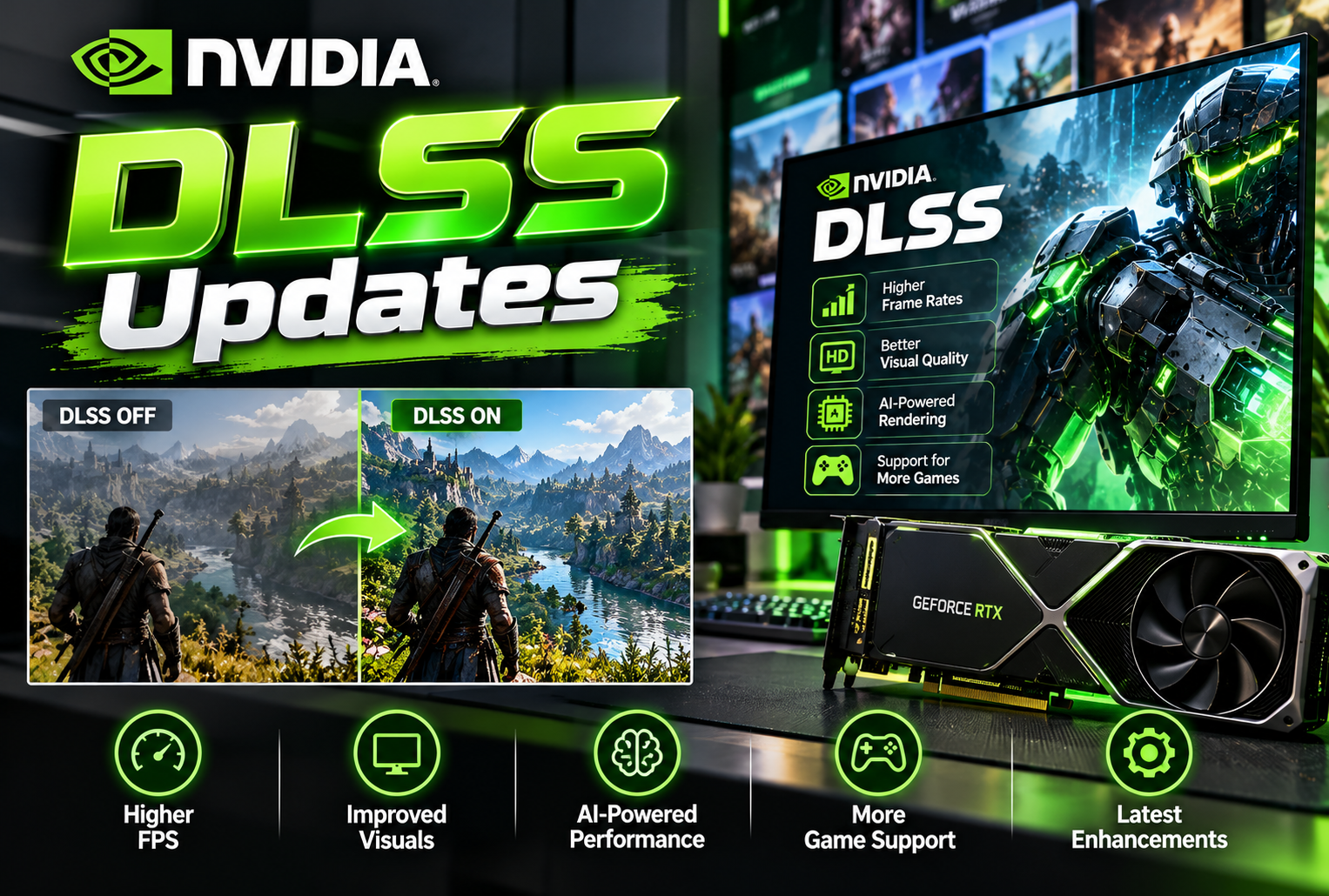
Deep Learning Super Sampling (DLSS) is a graphics technology developed by NVIDIA. It uses artificial intelligence to help supported games render images more efficiently.
Instead of relying entirely on traditional rendering at a high resolution, DLSS can use AI-assisted image reconstruction to produce a sharper output. Depending on the game, graphics card and settings, this can help improve performance while maintaining an appealing visual experience.
Some DLSS versions also include Frame Generation, which creates additional frames to make supported games appear smoother. These features are not identical, and the performance benefits vary between games and hardware configurations.
Call of Duty: Modern Warfare 4 Gets New Graphics Support
Fast-paced action games depend on responsive controls and stable frame rates. In a competitive shooter, inconsistent performance can affect how smooth the experience feels, particularly during intense combat sequences.
The announced DLSS support for Call of Duty: Modern Warfare 4 is designed to help compatible PC systems balance performance and image quality. The update also highlights features such as ray-traced reflections and NVIDIA Reflex on supported configurations.
Ray tracing simulates how light interacts with surfaces to create more realistic reflections and lighting. Meanwhile, NVIDIA Reflex is designed to reduce system latency in supported games, helping actions feel more responsive.
Players should remember that access to individual features depends on the graphics card, game settings and the final implementation. A newer graphics feature does not automatically mean every PC will receive the same improvement.
NBA 2K27 and AI-Enhanced Graphics
Sports games benefit from detailed player models, realistic lighting, animated movement and convincing stadium environments. In NBA 2K27, NVIDIA's announced DLSS developments aim to improve rendering performance while enhancing visual details.
AI-assisted rendering can help developers produce more sophisticated graphics without requiring every visual calculation to be handled in the same traditional way. However, the actual difference depends on the game engine and the player's hardware.
For gamers comparing PC specifications, it is worth checking the official GeForce website for supported graphics cards and feature requirements before making a purchase.
Why Frame Rates and Image Quality Both Matter
A high frame rate can make movement look smoother, while good image quality helps players see details more clearly. These two goals can sometimes compete, particularly when a game uses demanding effects or high-resolution textures.
AI upscaling and frame-generation technologies attempt to reduce this trade-off. Still, higher frame rates do not always translate into lower input latency, especially when frame generation is involved. Competitive players should test settings rather than automatically choosing the highest available option.
It is also important to consider monitor refresh rates, processor performance, memory and game optimisation. DLSS cannot eliminate every hardware bottleneck.
What Should PC Gamers Do Next?
Before changing settings, players should confirm that their graphics card supports the required feature and that their game and drivers are up to date. They can then compare image quality, frame rates and responsiveness using settings suited to their needs.
The latest NVIDIA DLSS updates demonstrate how AI is becoming an increasingly important part of PC graphics. As more games adopt these tools, players may gain additional options for balancing performance and visual detail.
The key takeaway is simple: check compatibility, test the available settings and judge the results on your own system rather than relying only on advertised performance figures.