
How To Safely Remove Mold From Bathroom Grout

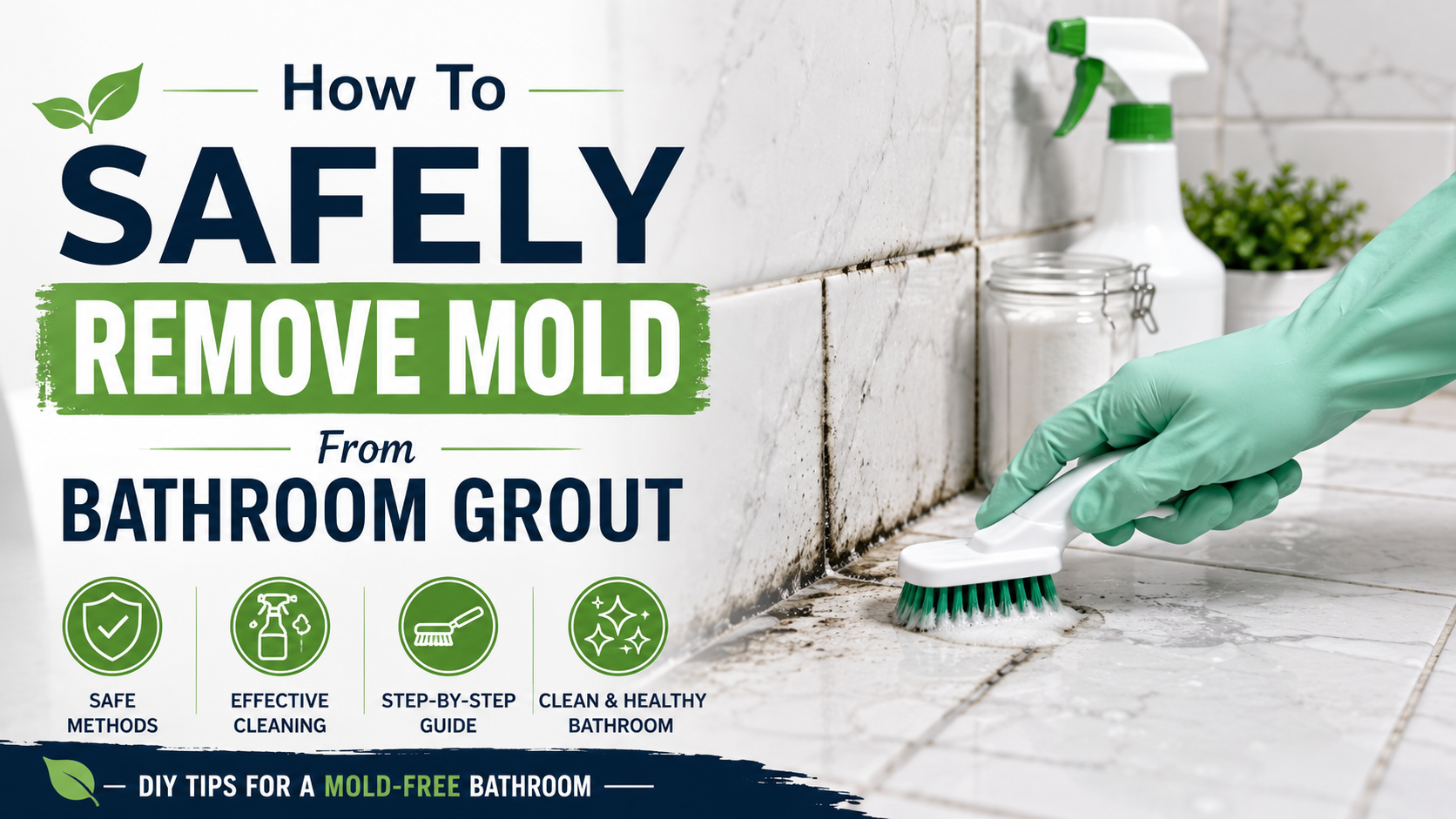
Bathroom grout easily traps moisture, soap residue, and dirt, making it a perfect place for mold growth. According to Yoyoguide, warm and poorly ventilated bathrooms are one of the biggest reasons mold keeps returning.
Signs Your Bathroom Grout Has Mold
- Black, green, or dark spots on grout lines
- Musty smell in the bathroom
- Discolored or soft grout
- Mold returns quickly after cleaning
If mold spreads repeatedly, excess moisture or poor ventilation may be the real problem.
Things You’ll Need
- Rubber gloves
- Face mask
- Spray bottle
- Baking soda
- White vinegar
- Hydrogen peroxide
- Old toothbrush or grout brush
- Warm water
- Dry microfiber cloth
Step 1: Ventilate the Bathroom
Open windows and turn on the exhaust fan before cleaning. Proper airflow reduces mold spores and keeps chemical fumes from building up.
Step 2: Apply Baking Soda Paste
Mix baking soda with a little water to form a thick paste. Spread it directly onto the moldy grout lines.
Baking soda works as a gentle abrasive cleaner without damaging grout.
Step 3: Spray Vinegar Over the Grout
Spray white vinegar onto the baking soda paste and let it fizz for about 10–15 minutes.
This reaction helps loosen mold, soap scum, and grime naturally. However, avoid vinegar on natural stone tiles because acidity can damage the surface.
Step 4: Scrub the Mold Carefully
Use a grout brush or old toothbrush and scrub in circular motions. For deeper stains, apply 3% hydrogen peroxide and leave it for several minutes before scrubbing again.
Hydrogen peroxide is often recommended because it kills mold without harsh fumes and is safer for grout than strong bleach solutions.
Step 5: Rinse and Dry Completely
Rinse the area with warm water and wipe it dry immediately. Mold grows quickly in damp grout, so drying is essential.
When Bleach Should Be Used
For severe mold stains on sealed grout or ceramic tile, diluted bleach may help. But bleach should be used carefully:
- Never mix bleach with vinegar or ammonia
- Always ventilate the bathroom
- Avoid bleach on natural stone surfaces
- Excessive bleach can weaken grout over time
How To Prevent Mold From Coming Back
Improve Airflow
Run the bathroom fan during and after showers for at least 20 minutes.
Keep Surfaces Dry
Use a squeegee or towel to remove water from walls and grout after bathing.
Seal the Grout
Reseal grout every 1–2 years to reduce moisture absorption.
Fix Leaks Quickly
Even small leaks can create constant moisture that encourages mold growth.
Important Safety Tips
- Wear gloves and a mask while cleaning
- Avoid steel wool or metal brushes that damage grout
- Test cleaners on a small hidden area first
- Replace damaged caulk if mold keeps returning
Some Reddit users also noted that recurring mold may indicate failed grout sealing or hidden moisture behind tiles.
Final Thoughts
Regular cleaning, proper ventilation, and keeping grout dry are the best ways to stop bathroom mold permanently. Natural cleaners like baking soda, vinegar, and hydrogen peroxide can safely remove most surface mold without damaging your bathroom tiles.
Also, read this page: 10 Reasons to Choose Agromarket for the Best Seeds and Plants Online