Top 20 Iron Rich Foods to Improve Hemoglobin and Overall Health

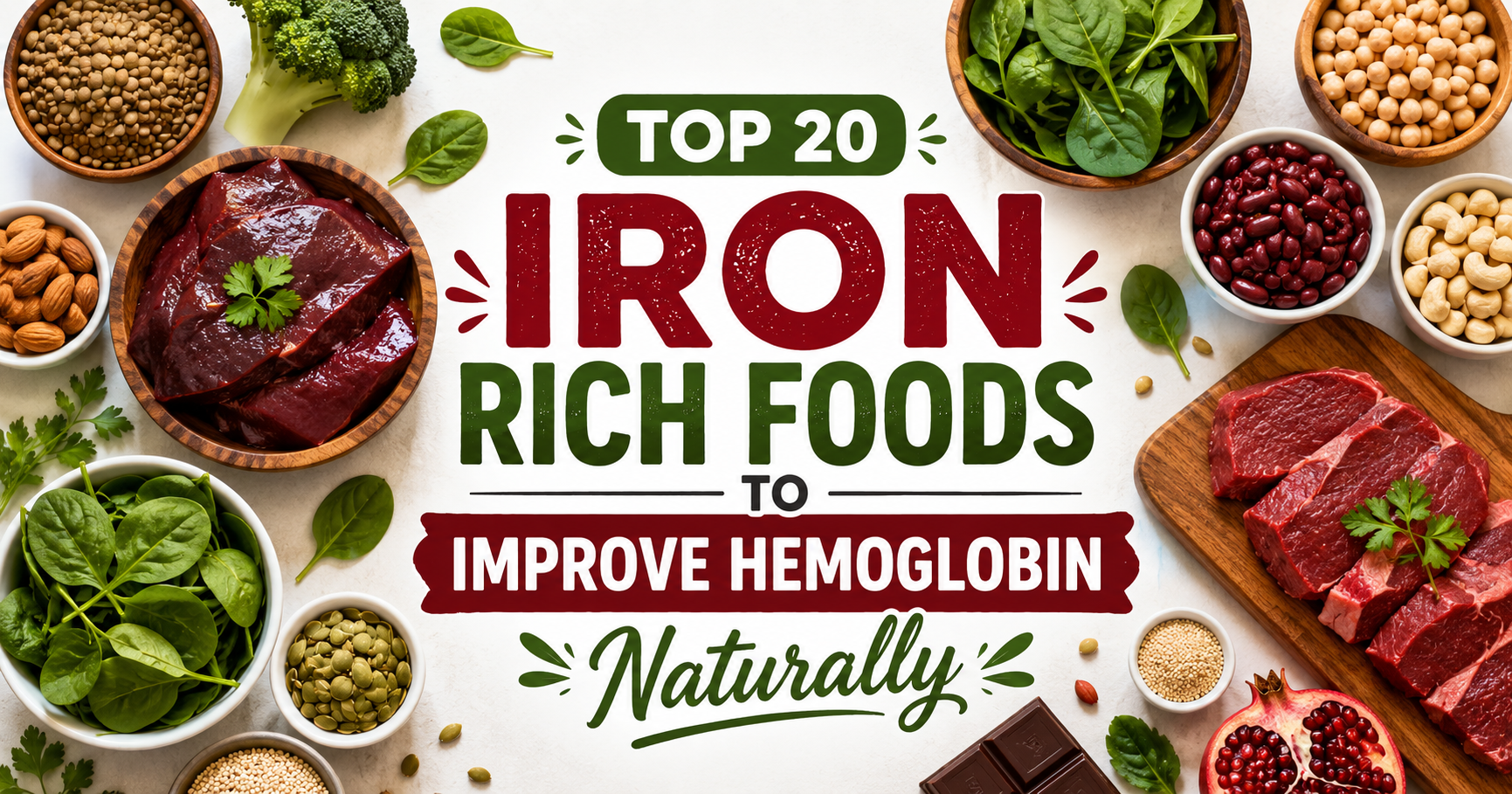
Iron is an essential mineral that plays a vital role in producing hemoglobin, the protein in red blood cells responsible for carrying oxygen throughout the body. When your body doesn’t get enough iron, hemoglobin levels can drop, leading to iron deficiency anemia, fatigue, weakness, dizziness, poor concentration, and reduced immunity.
The good news is that many everyday foods are naturally rich in iron. By including these foods in your daily diet and pairing them with vitamin C-rich fruits and vegetables, you can improve iron absorption and support healthy hemoglobin levels naturally.
Why Is Iron Important?
Iron is essential for many important functions in the body, including:
- Helps produce healthy red blood cells
- Improves hemoglobin levels
- Carries oxygen throughout the body
- Supports energy production
- Strengthens the immune system
- Enhances brain function and concentration
- Reduces fatigue and weakness
- Promotes healthy pregnancy and child development
Top 20 Iron Rich Foods
| Rank | Food | Iron (per 100g) | Major Benefits | Best Way to Eat |
|---|---|---|---|---|
| 1 | Spinach | 2.7 mg | Rich in iron, folate & antioxidants | Salads, soups, smoothies |
| 2 | Lentils (Dal) | 3.3 mg | Excellent vegetarian protein & iron | Dal, soups, curry |
| 3 | Chickpeas (Chana) | 2.9 mg | Supports healthy blood production | Boiled, roasted, hummus |
| 4 | Kidney Beans (Rajma) | 2.9 mg | High in iron and fiber | Rajma curry, salads |
| 5 | Soybeans | 5.1 mg | Rich in protein and iron | Soy chunks, tofu, soy milk |
| 6 | Tofu | 5.4 mg | Great vegan protein source | Stir-fries, grilled |
| 7 | Pumpkin Seeds | 8.8 mg | High in iron, zinc & magnesium | Snack, salads |
| 8 | Sesame Seeds (Til) | 14.6 mg | Excellent plant-based iron source | Sprinkle on meals |
| 9 | Beetroot | 0.8 mg | Supports blood formation | Juice, salad |
| 10 | Broccoli | 0.7 mg | Contains iron and vitamin C | Steamed, stir-fried |
| 11 | Quinoa | 1.5 mg | Complete protein with iron | Salads, bowls |
| 12 | Dates | 1.0 mg | Natural energy booster | Snack, smoothies |
| 13 | Raisins | 1.9 mg | Good source of iron and antioxidants | Breakfast, trail mix |
| 14 | Pomegranate | 0.3 mg | Supports healthy blood circulation | Fresh fruit, juice |
| 15 | Eggs | 1.8 mg | Protein with moderate iron | Boiled, omelet |
| 16 | Chicken Liver | 9.0 mg | One of the richest heme iron foods | Stir-fried |
| 17 | Lean Red Meat | 2.6 mg | Highly absorbable heme iron | Grilled, roasted |
| 18 | Fish (Tuna, Sardines) | 1–2 mg | Iron plus omega-3 fatty acids | Baked, grilled |
| 19 | Shellfish (Clams, Oysters) | Up to 28 mg | Extremely rich in iron | Steamed |
| 20 | Dark Chocolate (70%+) | 11.9 mg | Iron with powerful antioxidants | Moderate consumption |
Detailed Information About Each Food
1. Spinach
Spinach is one of the most popular iron-rich vegetables. It also provides folate, vitamin A, vitamin C, and antioxidants that help improve blood health. Although spinach contains non-heme iron, eating it with lemon juice or other vitamin C-rich foods increases iron absorption.
2. Lentils (Dal)
Lentils are packed with iron, protein, and dietary fiber. They are an excellent choice for vegetarians looking to improve hemoglobin naturally. Regular consumption supports healthy red blood cell production.
3. Chickpeas (Chana)
Chickpeas provide iron, protein, and complex carbohydrates that keep you energized throughout the day. They also help improve digestion due to their high fiber content.
4. Kidney Beans (Rajma)
Rajma contains iron, magnesium, and fiber that contribute to better blood health. Including kidney beans in your weekly diet can help maintain healthy iron stores.
5. Soybeans
Soybeans are among the richest vegetarian sources of iron and protein. They are commonly consumed as soy milk, tofu, soy chunks, or edamame.
6. Tofu
Tofu is made from soybeans and provides a significant amount of iron while being low in saturated fat. It is ideal for vegan and vegetarian diets.
7. Pumpkin Seeds
Pumpkin seeds are nutrient-dense and contain iron, magnesium, zinc, and healthy fats. They make a perfect healthy snack while supporting hemoglobin production.
8. Sesame Seeds (Til)
Sesame seeds are one of the richest plant-based sources of iron. They also contain calcium, copper, and healthy fats that support overall wellness.
9. Beetroot
Although beetroot isn’t particularly high in iron, it contains folate and nitrates that support healthy blood circulation and red blood cell production.
10. Broccoli
Broccoli provides both iron and vitamin C, making it an excellent vegetable for improving iron absorption naturally.
11. Quinoa
Quinoa is a complete protein containing all essential amino acids. It also supplies iron, magnesium, and fiber, making it an ideal healthy grain.
12. Dates
Dates are rich in natural sugars, fiber, and iron, making them an excellent snack for individuals experiencing low energy due to iron deficiency.
13. Raisins
Raisins contain moderate amounts of iron along with antioxidants and potassium. They can easily be added to cereals, desserts, or salads.
14. Pomegranate
Pomegranate is widely known for supporting healthy blood circulation. While it contains a small amount of iron, it also provides vitamin C and antioxidants that support overall blood health.
15. Eggs
Egg yolks contain moderate amounts of iron along with high-quality protein and essential vitamins that contribute to healthy red blood cell production.
16. Chicken Liver
Chicken liver is one of the richest natural sources of highly absorbable heme iron. It is especially beneficial for people with iron deficiency anemia.
17. Lean Red Meat
Lean beef and lamb provide heme iron, which is absorbed much more efficiently than plant-based iron. They also contain vitamin B12 and zinc.
18. Fish
Fish such as tuna, sardines, and salmon provide iron along with heart-healthy omega-3 fatty acids, making them an excellent addition to a balanced diet.
19. Shellfish
Clams, mussels, and oysters are among the richest sources of iron available. They also provide vitamin B12, zinc, and high-quality protein.
20. Dark Chocolate
Dark chocolate with at least 70% cocoa contains iron, magnesium, and antioxidants. Enjoy it in moderation as part of a balanced diet.
Daily Iron Requirements
| Age Group | Recommended Daily Iron Intake |
|---|---|
| Adult Men | 8 mg |
| Women (19–50 years) | 18 mg |
| Women (51+ years) | 8 mg |
| Pregnant Women | 27 mg |
| Breastfeeding Women | 9–10 mg |
| Children (1–8 years) | 7–10 mg |
| Teenagers | 11–15 mg |
Tips to Increase Iron Absorption
To get the maximum benefit from iron-rich foods, follow these simple tips:
- Eat vitamin C-rich foods like oranges, lemons, kiwi, strawberries, tomatoes, and bell peppers with iron-rich meals.
- Avoid drinking tea or coffee for at least one hour before or after meals.
- Include both plant-based and animal-based iron sources in your diet.
- Cook food in cast iron cookware whenever possible.
- Maintain adequate intake of vitamin B12, folate, and protein.
- Soak, sprout, or ferment legumes to improve iron absorption.
Signs of Low Hemoglobin or Iron Deficiency
Low iron levels can cause several symptoms, including:
- Constant fatigue
- Weakness
- Pale skin
- Dizziness
- Shortness of breath
- Frequent headaches
- Cold hands and feet
- Brittle nails
- Hair loss
- Poor concentration
- Rapid heartbeat
- Reduced immunity
If these symptoms continue, consult a healthcare professional for proper diagnosis and treatment.
Frequently Asked Questions (FAQs)
Which food contains the highest amount of iron?
Shellfish such as oysters and clams contain some of the highest amounts of naturally occurring iron. Among vegetarian foods, sesame seeds and pumpkin seeds are excellent choices.
Which fruit is best for increasing hemoglobin?
Pomegranate, dates, raisins, dried apricots, and vitamin C-rich fruits like oranges and kiwi are beneficial for supporting healthy hemoglobin levels.
Is spinach enough to treat iron deficiency?
Spinach is a healthy source of iron, but it should be combined with other iron-rich foods and vitamin C sources for better absorption. Severe iron deficiency may require medical treatment.
How can I improve iron absorption naturally?
Consume iron-rich foods together with vitamin C-rich fruits and vegetables, avoid tea and coffee around mealtime, and maintain a balanced diet containing protein, folate, and vitamin B12.
Conclusion
Including a variety of iron-rich foods in your daily meals is one of the best natural ways to improve hemoglobin levels, prevent iron deficiency, and maintain good overall health. Foods like spinach, lentils, soybeans, pumpkin seeds, sesame seeds, tofu, chicken liver, lean red meat, fish, and shellfish provide valuable iron along with essential vitamins and minerals that support healthy blood production.
For the best results, pair iron-rich foods with vitamin C-rich fruits and vegetables, stay hydrated, and follow a balanced diet. If you continue to experience symptoms of low hemoglobin despite dietary improvements, seek medical advice for proper evaluation and treatment.