
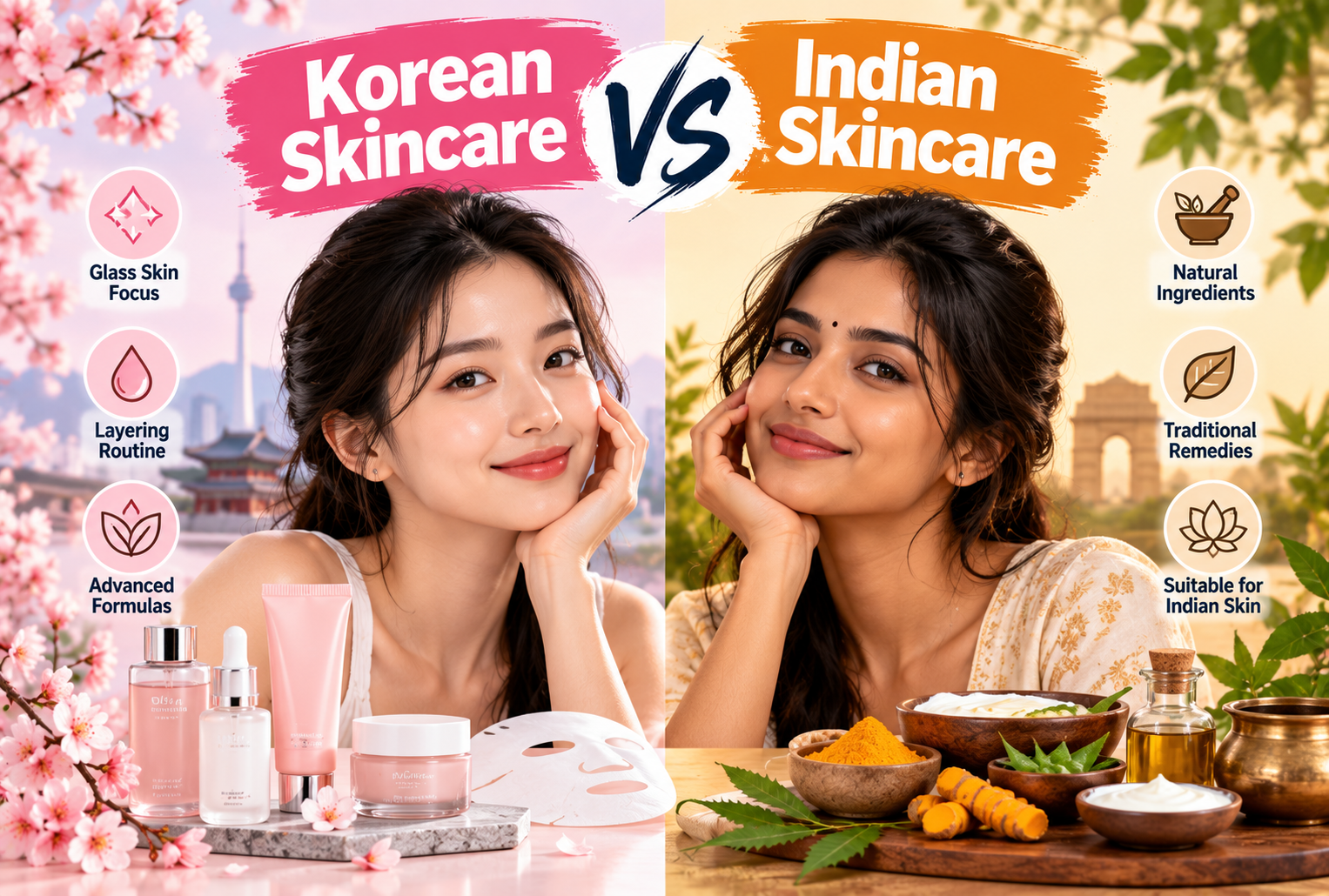
Skincare has become an important part of many people's daily routines, and two popular approaches are Korean skincare and Indian skincare. Korean beauty, commonly known as K-beauty, is often associated with lightweight formulas, hydration, and carefully layered routines. Indian skincare includes a wide range of modern products, dermatologist-recommended ingredients, and traditional ingredients such as turmeric, aloe vera, and neem.
But when it comes to Korean Skincare vs Indian Skincare, which one is better for your skin?
The answer depends on your skin type, concerns, budget, climate, and personal preferences. A product manufactured in Korea is not automatically better than one made in India, just as a traditional ingredient is not automatically safer or more effective than a scientifically formulated skincare product.
For people living in India, factors such as heat, humidity, pollution, sun exposure, and seasonal dryness can influence which products feel comfortable and work well in a routine.
In this guide, we will compare Korean and Indian skincare approaches, popular ingredients, product costs, daily routines, and common mistakes to help you make an informed choice.
1. What Is Korean Skincare?
Korean skincare refers to beauty products and routines associated with South Korea's skincare industry. K-beauty is widely known for its focus on maintaining the skin barrier, supporting hydration, and developing products with different textures and formulations.
Korean skincare does not follow one fixed routine. Some people use only a cleanser, moisturiser, and sunscreen, while others include toners, essences, serums, and masks according to their needs.
Common characteristics of Korean skincare include:
-
Hydration-focused formulas: Products containing ingredients such as glycerin, hyaluronic acid, and panthenol help support skin hydration.
-
Lightweight textures: Many products are designed to feel comfortable in multiple layers.
-
Barrier-supporting ingredients: Ceramides and other moisturising ingredients can help support the skin's protective barrier.
-
Targeted treatments: Serums and treatments may address concerns such as uneven tone, dryness, or blemishes.
-
Sun protection: Sunscreens are an important part of a daytime skincare routine.
Korean skincare products are available in different price ranges, from budget-friendly options to premium brands.
Important: You do not need a 10-step routine to benefit from K-beauty. A few well-chosen products can be enough.
2. What Is Indian Skincare?
Indian skincare includes products developed by Indian manufacturers, Indian beauty brands, dermatology-focused companies, and traditional personal-care practices.
The market offers a wide variety of cleansers, moisturisers, sunscreens, serums, and treatments. Some products use ingredients inspired by traditional Indian beauty practices, while others focus on modern cosmetic science and established skincare actives.
Common characteristics of Indian skincare include:
-
Products for local conditions: Many brands develop lightweight moisturisers, sunscreens, and cleansers for warm or humid environments.
-
A broad range of prices: Options are available for different budgets and preferences.
-
Traditional ingredients: Some products include turmeric, neem, aloe vera, or saffron-inspired formulations.
-
Modern active ingredients: Indian brands also offer products containing niacinamide, salicylic acid, vitamin C, and retinoids.
-
Easy local availability: Many products are available through pharmacies, beauty retailers, brand websites, and online marketplaces.
Not every Indian product is designed for Indian weather, and not every traditional ingredient suits every skin type. Product formulation and quality matter more than the country of origin.
The key takeaway: Indian skincare can be both traditional and science-led, just as Korean skincare can include a wide range of approaches.
3. Korean Skincare vs Indian Skincare: Key Differences
Although both approaches aim to support healthy-looking skin, they may differ in product design, ingredients, textures, and beauty traditions.
| Feature | Korean Skincare | Indian Skincare |
|---|---|---|
| Main focus | Often emphasises hydration, skin-barrier care, and layered routines | Includes hydration, targeted treatments, traditional ingredients, and modern formulations |
| Product textures | Many lightweight gels, essences, and fluid lotions are available | Includes lightweight gels, creams, lotions, oils, and serums |
| Popular ingredients | Centella asiatica, snail mucin, rice-derived ingredients, ceramides, and fermented ingredients | Aloe vera, turmeric, neem, niacinamide, salicylic acid, and vitamin C |
| Routine style | May include toners, essences, serums, and moisturisers | Can be minimal or layered, depending on the products and personal preference |
| Price range | Budget to premium; imported products may cost more | Budget to premium, with many locally available options |
| Availability in India | Widely available through selected retailers and online stores; stock and authenticity vary | Broad availability through local stores, pharmacies, and online retailers |
| Climate suitability | Depends on the specific formula and texture | Depends on the specific formula and texture |
| Best selection method | Choose based on ingredients, formulation, and skin needs | Choose based on ingredients, formulation, and skin needs |
There is no universal winner. A well-formulated Indian moisturiser may work better for you than an imported Korean one, while a Korean sunscreen or serum may fit your preferences better than a locally available alternative.
4. Korean Skincare Ingredients vs Indian Skincare Ingredients
Ingredients are more useful for comparing skincare products than brand nationality alone. Look at the ingredient list, concentration where disclosed, formulation, and the skin concern you want to address.
Popular Korean skincare ingredients
1. Centella asiatica
Often included in products designed for sensitive or irritated-feeling skin. Its suitability depends on the complete formula, and botanical ingredients can still trigger reactions in some people.
2. Hyaluronic acid
A humectant that helps attract and retain water in the skin's outer layers. It can be useful for supporting hydration.
3. Ceramides
Lipids that help support the skin barrier and reduce moisture loss when used in suitable moisturising formulations.
4. Snail secretion filtrate
Used in some Korean beauty products to provide moisturising and conditioning benefits. Evidence varies by product and specific claim, and it is not essential for a good skincare routine.
5. Rice-derived ingredients
Found in various products for conditioning and cosmetic brightening effects. Results depend on the ingredient, formula, and intended use.
Popular ingredients in Indian skincare
1. Aloe vera
Commonly used in moisturising and soothing products. The overall formula matters, especially for sensitive skin.
2. Turmeric
A traditional ingredient used in some skincare products. Evidence for specific cosmetic benefits varies, and applying kitchen turmeric directly to the face may cause irritation or staining.
3. Neem
Used in some products marketed for oily or blemish-prone skin. It should not be assumed to treat acne or replace proven acne treatments.
4. Niacinamide
A form of vitamin B3 that can help support the skin barrier and improve the appearance of uneven tone and oiliness in suitable formulations.
5. Salicylic acid
A beta-hydroxy acid used in certain products to help unclog pores and manage blackheads. It may irritate sensitive skin, particularly when overused.
6. Vitamin C
Used in products designed to improve the appearance of uneven skin tone and provide antioxidant benefits. Stability and formulation affect how well a product performs.
Remember: These ingredients are not exclusive to one country. Korean and Indian brands may use many of the same ingredients in different formulations.
5. Which Is Better for Indian Weather?
India has a wide range of climates, from hot and humid coastal regions to dry interiors, cold winters, and high-altitude areas. Your location and daily activities can influence which skincare textures feel most comfortable.
For hot and humid weather
If your skin feels oily or sweaty during the day, consider:
-
A gentle cleanser.
-
A lightweight gel or lotion moisturiser.
-
A broad-spectrum sunscreen with a comfortable finish.
-
Non-comedogenic products if you are prone to clogged pores.
Some Korean gel moisturisers and Indian lightweight lotions may work well in humid weather. Choose the formula, not the country.
For dry weather or winter
If your skin feels tight, flaky, or rough, consider:
-
A gentle, non-stripping cleanser.
-
A moisturiser containing ingredients such as glycerin or ceramides.
-
A richer cream if your skin needs additional moisture.
-
Sunscreen during daytime.
Both Indian and Korean brands offer products suitable for dry skin.
For pollution and outdoor exposure
A practical routine should prioritise cleansing without over-washing, moisturising, and daily sun protection. If you spend long periods outdoors, reapply sunscreen according to the product directions and your exposure.
Best tip for Indian weather: Choose products that remain comfortable throughout your normal day. A routine you can follow consistently is more useful than a complicated one that feels uncomfortable.
6. Which Is Better for Different Skin Types?
The best skincare approach depends on your skin's needs rather than whether a product is Korean or Indian.
Oily skin
Look for lightweight moisturisers and cleansers that remove excess oil without leaving the skin tight. If you experience clogged pores, a suitable salicylic acid product may help.
Good options: Lightweight gel moisturisers, non-comedogenic products, and sunscreen with a finish you like.
Dry skin
Choose a gentle cleanser and a moisturiser that helps reduce water loss. Ingredients such as glycerin, ceramides, and petrolatum in suitable formulations may help.
Good options: Cream moisturisers, hydrating serums, and barrier-supporting products.
Combination skin
If your forehead, nose, and chin become oily while your cheeks feel dry, use products that balance comfort across different areas.
Good options: A gentle cleanser, lightweight moisturiser, and targeted treatment only where needed.
Sensitive skin
Look for simple formulations and avoid introducing several new products at once. Fragrance, essential oils, exfoliating acids, and some botanical extracts can irritate certain people.
Good options: Gentle cleansers, fragrance-free moisturisers, and products formulated for sensitive skin.
Acne-prone skin
Choose non-comedogenic products where possible and consider evidence-based acne ingredients. Persistent, painful, or scarring acne may need assessment by a dermatologist.
Good options: Gentle cleansing, an appropriate moisturiser, sunscreen, and a suitable acne treatment.
Patch-test new products, particularly if you have sensitive skin or a history of reactions. Stop using a product if it causes significant burning, swelling, or a persistent rash.
7. Korean Skincare Routine vs Indian Skincare Routine
You do not need separate routines based on nationality. The same basic principles apply to both Korean and Indian skincare products.
A simple morning routine
Step 1: Cleanse
Use a gentle cleanser suited to your skin. Some people with dry skin may prefer rinsing with water in the morning, depending on their needs.
Step 2: Apply a treatment if needed
A serum containing an ingredient such as niacinamide or vitamin C may be useful for a specific concern. This step is optional.
Step 3: Moisturise
Choose a gel, lotion, or cream that keeps your skin comfortable without excessive greasiness.
Step 4: Apply sunscreen
Use a broad-spectrum sunscreen with SPF 30 or higher. Apply enough to cover exposed skin and reapply as directed, particularly after sweating, swimming, or extended outdoor exposure.
A simple evening routine
Step 1: Remove sunscreen and makeup
Use a suitable cleanser. If you wear water-resistant makeup or sunscreen, a first cleansing step may help remove it.
Step 2: Cleanse gently
Avoid aggressive scrubbing or using several harsh cleansing products together.
Step 3: Apply a targeted treatment if needed
Use an appropriate treatment for your main concern, following the product directions.
Step 4: Moisturise
Help maintain skin comfort overnight with a suitable moisturiser.
This routine can include products from both Korean and Indian brands. Add a toner, essence, or sheet mask only if it offers a benefit you want and does not make your routine unnecessarily complicated.
8. Korean Beauty Products vs Indian Brands: Which Is More Affordable?
Cost is another important factor when comparing Korean beauty products and Indian brands.
Imported products may cost more because of shipping, duties, retailer pricing, and distribution. However, Korean brands also offer products at different price points, and premium Indian products can be expensive too.
How to compare skincare costs
-
Check the price per millilitre: A larger package may offer better value, provided you can use it before expiry.
-
Compare ingredients and purpose: Two products should be compared based on their intended use and formula, not just their packaging.
-
Avoid unnecessary steps: You may not need separate toners, essences, serums, and masks.
-
Buy from reliable sellers: Check the seller's reputation, packaging, batch details, and expiry information.
-
Consider regular replacement costs: Sunscreen and daily moisturisers may be more important to your routine than occasional extras.
A budget-friendly skincare routine
You can begin with just three core products:
-
Cleanser: Choose one that removes dirt, sweat, and excess oil without irritating your skin.
-
Moisturiser: Select a texture that suits your skin type and climate.
-
Sunscreen: Choose broad-spectrum SPF 30 or higher that you are willing to apply consistently.
You can build this routine using Indian products, Korean products, or a combination of both.
The smartest skincare purchase is one that suits your skin, fits your budget, and gets used consistently.
9. Common Skincare Mistakes to Avoid
Even high-quality skincare products may disappoint when used incorrectly. Avoid these common mistakes:
1. Following trends without understanding your skin: A viral product may not address your specific concern.
2. Using too many active ingredients together: Combining several exfoliating or treatment products can increase irritation.
3. Skipping moisturiser because you have oily skin: Oily skin can still become dehydrated or irritated.
4. Ignoring sunscreen: Sun protection is important for reducing UV damage and helping prevent worsening of uneven pigmentation.
5. Expecting overnight results: Many skincare changes take several weeks of consistent use, depending on the concern and product.
6. Applying kitchen ingredients directly to your face: Lemon juice, undiluted essential oils, and abrasive DIY scrubs can irritate or damage the skin.
7. Changing your entire routine at once: Introduce products gradually so you can identify which one causes a reaction.
8. Buying products only because they are imported: The origin of a product does not guarantee that it will work better for you.
9. Using products past their expiry date: Follow storage instructions and discontinue products that have changed in smell, texture, or appearance.
10. Treating persistent skin problems on your own: Seek professional advice for severe acne, ongoing rashes, sudden pigmentation changes, or persistent irritation.
10. How to Choose Skincare Products for Your Skin Type
If you are confused about whether to buy Korean skincare products or Indian brands, use this simple selection process.
Step 1: Identify your main concern. Decide whether you want to address dryness, oiliness, acne, sensitivity, or uneven tone.
Step 2: Check the ingredients. Look for ingredients suited to your concern and avoid known triggers.
Step 3: Consider the climate. A light gel may feel more comfortable in humid weather, while a richer cream may suit dry or cold conditions.
Step 4: Read the product directions. Follow the recommended amount and frequency, particularly for active ingredients.
Step 5: Consider your budget. Include the cost of replacing essential products, especially sunscreen.
Step 6: Introduce products gradually. Patch-test new products and avoid adding multiple active ingredients at the same time.
Step 7: Review your results. Give a suitable routine time to work, unless a product causes irritation or another adverse reaction.
For persistent or complicated skin concerns, a qualified dermatologist can help you choose an appropriate routine.
11. Can You Mix Korean and Indian Skincare Products?
Yes. You can combine Korean and Indian skincare products in the same routine as long as the products suit your skin and are compatible with how you use them.
For example, your routine might include:
- An Indian gentle cleanser.
- A Korean hydrating serum.
- An Indian moisturiser.
- A sunscreen from either country.
There is no need to choose just one skincare category or brand.
However, combining products does not automatically make a routine more effective. Using multiple exfoliating acids, retinoids, or other strong treatments without a suitable plan may increase irritation.
Start with a simple routine and add products only when you have a clear reason to use them.
Conclusion
When comparing Korean Skincare vs Indian Skincare, the best choice is not determined by the country where a product is made. Both approaches offer a wide range of ingredients, formulations, and prices that can support different skincare needs.
Korean skincare may appeal to people who enjoy lightweight hydrating products and layered routines. Indian skincare offers extensive choices, including affordable everyday essentials, modern active ingredients, and products inspired by traditional practices.
For people living in India, climate, sun exposure, skin type, and budget are important factors to consider. Start with a simple routine, choose products based on their ingredients and purpose, and introduce new products gradually.
You do not need the most expensive products or the longest routine to care for your skin. Focus on gentle cleansing, suitable moisturising, consistent sun protection, and products that work for your individual needs.
Ultimately, the best skincare routine is one that is safe, affordable, comfortable, and realistic enough to follow consistently.